Written by: Kevin
I was staying in a hotel recently and noticed a small bench tucked beside the bed.
It wasn’t remarkable. It wasn’t beautiful. It wasn’t poorly made either. It did its job and disappeared into the room, exactly as hotel furniture is designed to do.
But it stopped me anyway.
The piece was simple. A box with a cushion on top. Two drawers. Neutral fabric. Neutral wood tone. Neutral hardware.
It existed to solve a problem, not to be loved.
And that’s what made it interesting.
Good design often starts with something unremarkable
Most furniture we encounter every day is built to be invisible.
Hotel furniture, office furniture, and waiting room furniture. These pieces are optimized for cost, durability, and replacement. They are meant to offend no one and excite no one.
That does not make them bad. It makes them purposeful in a different way.
But when you look at a piece like this through a maker’s lens, something else happens. You stop seeing it as a finished object and start seeing it as a starting point.
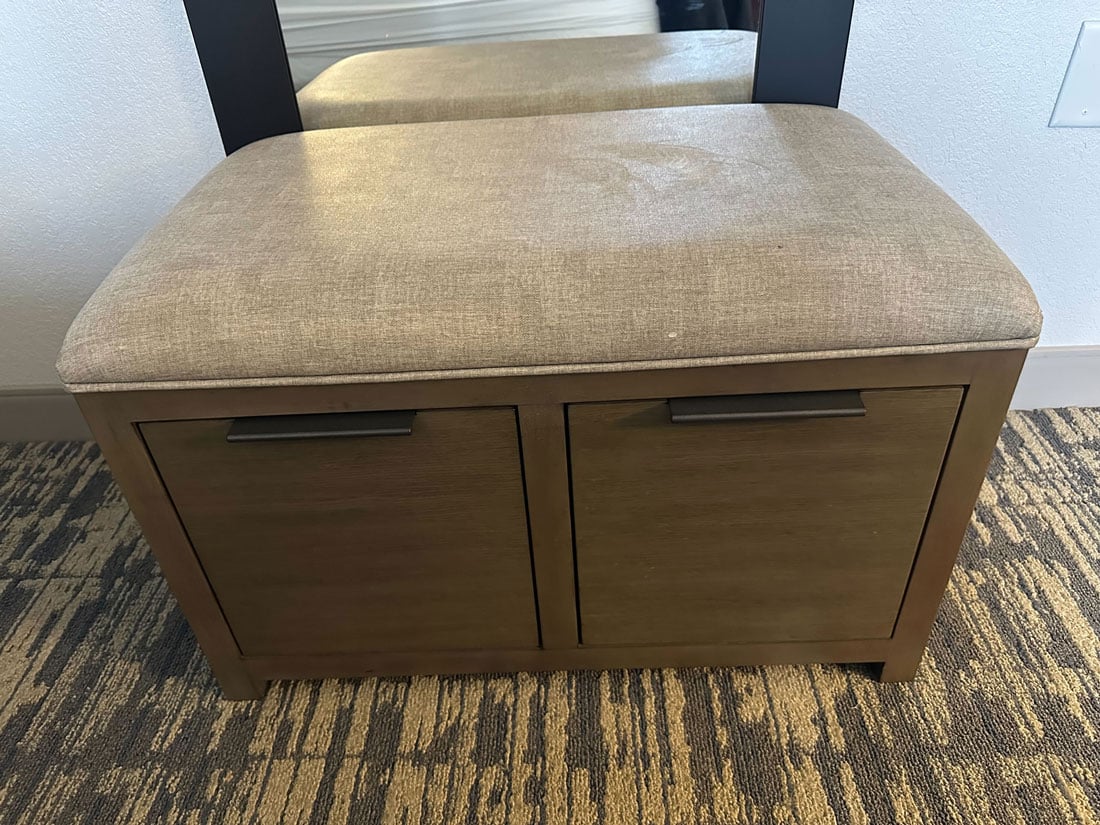
The proportions were fine. The function made sense. The idea was sound.
What was missing was intention.
The difference between furniture that exists and furniture you live with
There’s a quiet but important difference between furniture that fills space and furniture that earns its place.
This bench existed to meet a requirement. A place to sit. A place to drop a bag. A place to store something out of sight.
But imagine if it were designed for a home instead of a hotel.
- What if the proportions were tuned to feel lighter?
- What if the materials felt warmer instead of neutral?
- What if the drawers moved with intention instead of tolerance?
- What if the cushion felt considered instead of generic?
These are not dramatic changes. They are small decisions layered on top of one another.
And those small decisions are where craftsmanship lives.
Seeing potential is a skill you practice
One of the things I’m learning as I build Redbird is that inspiration rarely arrives fully formed.
It doesn’t announce itself.
More often, it shows up quietly, in places you aren’t looking for it. A hotel room. A waiting area. A piece of furniture no one talks about.
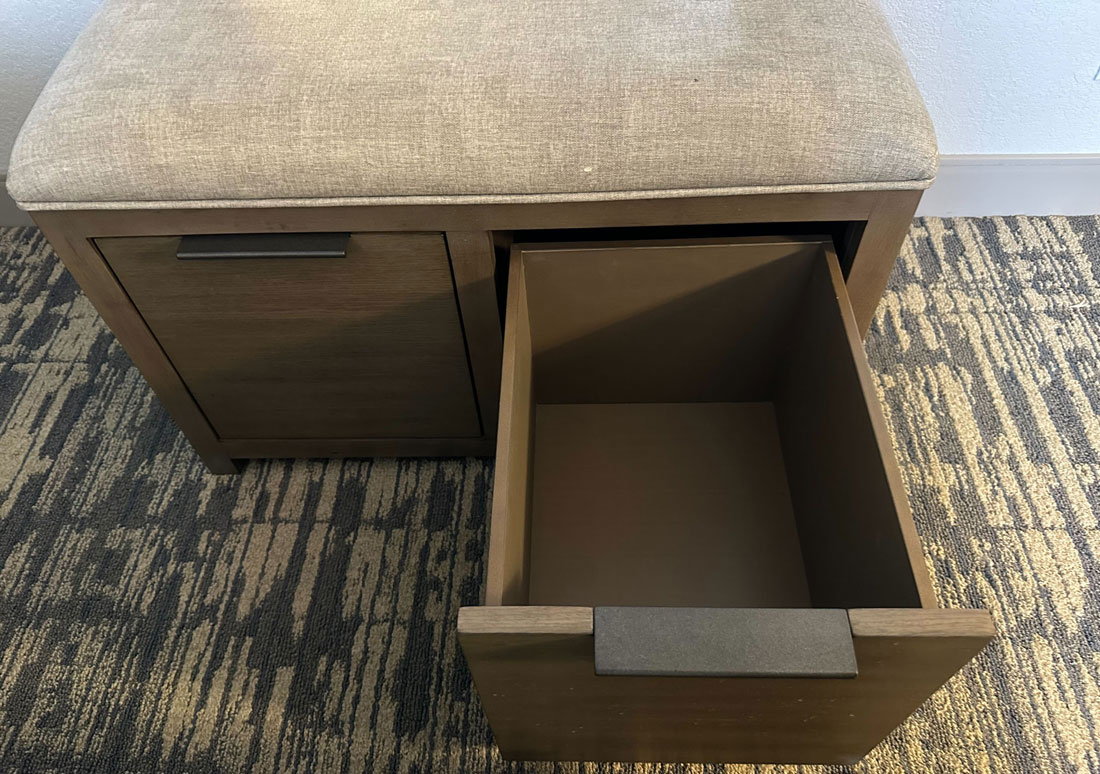
IMAGE SUGGESTION: DRAWER OPEN SHOT, SHOWING INTERIOR SPACE AND CONSTRUCTION.
The practice is not finding perfect ideas. The practice is noticing imperfect ones and asking better questions.
- What works here?
- What feels heavy?
- What feels rushed?
- What would happen if this were built for longevity instead of turnover?
That question is usually the beginning.
What this could become with intention
This bench was designed to survive. Not to belong.
It was built for turnover, for durability at scale, for a life measured in years rather than decades. Nothing about it was careless. It was simply optimized for a different outcome.
That is often where the most interesting ideas hide.
Starting with what already works
At its core, the idea is solid.
A low bench with drawers earns its footprint. It solves more than one problem at once. In a bedroom, entryway, or hallway, that combination of seating and storage makes sense.
The issue is not the concept. It is the absence of deliberate detail.
Hotel furniture is designed to disappear. Home furniture should do the opposite.
Asking different questions
Instead of asking how many times a drawer can be opened before failing, the questions shift.
- What would this feel like to use every day?
- What would it sound like when the drawer closes?
- How would the piece age in a lived-in space, not a controlled one?
What details would matter if this were made for someone who chose it, not someone who inherited it by booking a room?
Those questions change everything.
Material as the foundation
The first shift is material.
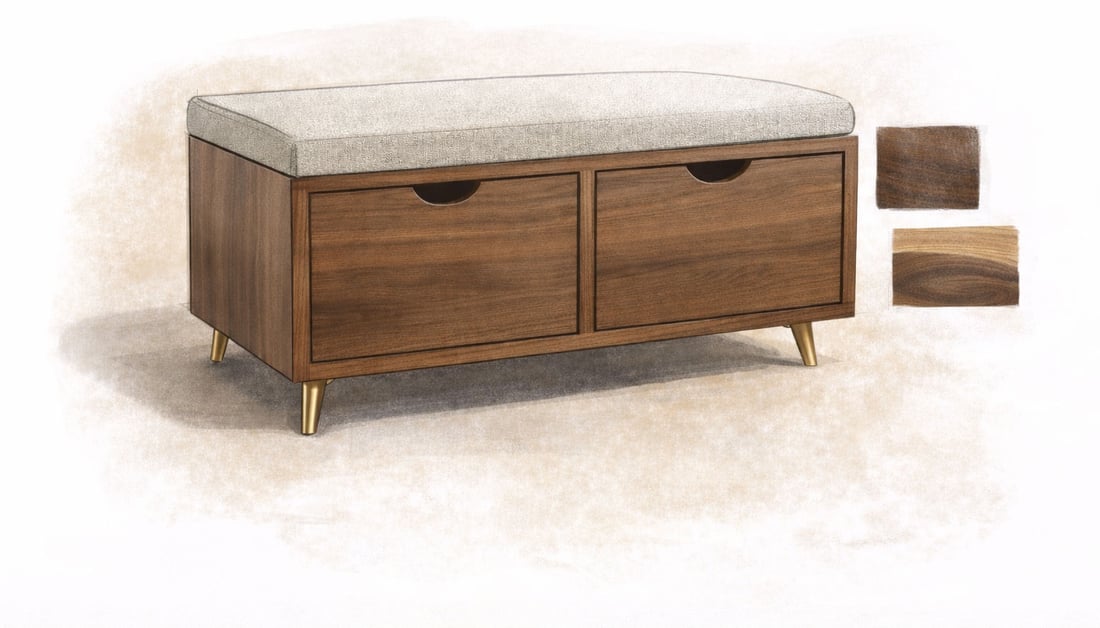
Instead of veneered panels and composite cores, this piece becomes solid hardwood. Black walnut feels like the right starting point. It has depth and warmth, and it reads as intentional even in restrained forms.
Walnut also changes over time. It responds to light. It softens slightly with use. It does not stay frozen in its first day of ownership.
A piece like this should feel better five years in than it did on day one.
Removing hardware, not adding it
The original bench relied on applied pulls. They worked, but they felt borrowed.
Here, the drawers use cut-out handles. Simple arcs carved directly into the drawer fronts. No added hardware. No visual interruption. Just negative space doing the work.
It is a small change, but it shifts the piece's character entirely. The drawers feel quieter. More considered. Less industrial.
You do not notice the handle. You notice the proportion.
Elevation through restraint
The bench lifts slightly off the floor on short brass legs, angled just enough to introduce lightness without becoming decorative.
They are subtle. About two inches. Enough to keep the piece from feeling grounded, but not so much that it starts to float.
The brass is used sparingly. Not polished. Not loud. Just warm.
The goal is balance.
Comfort that feels permanent
The cushion matters more than it seems.
Instead of foam wrapped in vinyl, this becomes a properly upholstered top. A higher-quality fill. A fabric that feels like it belongs in a home, not a lobby.
It should invite you to sit without announcing itself. Comfortable, but composed. Soft, but structured.
The cushion is not an accessory. It is part of the piece.
A different kind of durability
None of these changes makes the bench less durable. They make it durable in a different way.
This is not furniture designed to be ignored. It is furniture designed for use with awareness.
The drawers will show wear. The walnut will shift in tone. The brass will develop a patina. The cushion will soften where people sit most often.
Those are not flaws. They are proof of life.
This is the difference between something that fills a room and something that becomes part of it.
Why this matters to how I want to build
Redbird is not about novelty. It’s about attention.
This bench is a reminder that good furniture does not need to start as a bold idea. It can start as a practical one that is simply treated with care.
When you take something ordinary and rebuild it with intention, the result feels grounded. It feels familiar in the best way.
That is the kind of work I’m drawn to.
Pieces that feel obvious once they exist. Pieces that don’t need explaining. Pieces that quietly improve the spaces they live in.
Inspiration is everywhere if you slow down enough to notice it
This wasn’t a design revelation. It was a moment of recognition.
A reminder that inspiration doesn’t only live in galleries, studios, or perfectly styled spaces. It shows up in hotels, in corners, in furniture that was never meant to be admired.
The work is paying attention.
The work is asking what could be better.
The work is carrying that curiosity back into the shop.
That’s where the ideas that last tend to come from.