
Should Dining Chairs Match the Table?
Written by: Kevin
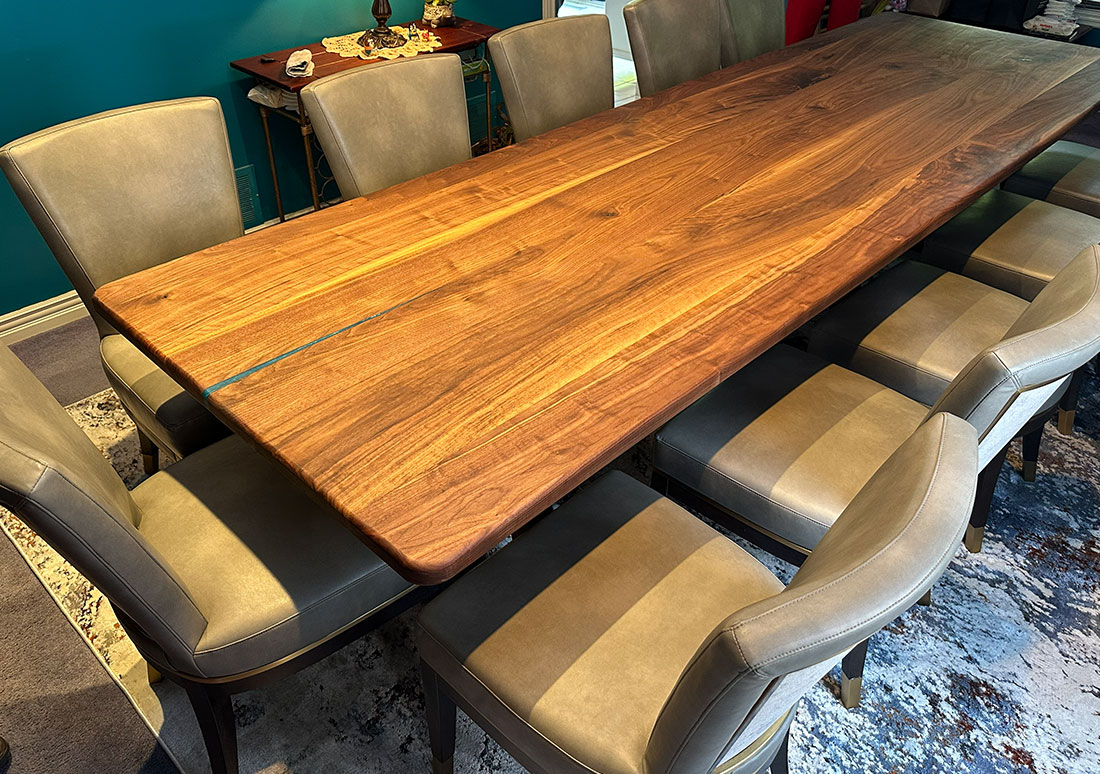
The table gets chosen. The chairs get used.
That gap explains most of what goes wrong when people shop for a dining set. The table is the piece you plan the room around. The chairs are the pieces your body actually touches, three times a day, for years.
So here is the short answer. Dining chairs do not have to match the table, and matching the wood is the least important thing to get right.
What matters more is how the chairs fit the table and the room, and whether one shared element ties the whole thing together.
Matching a set is the safe-feeling choice. It is rarely the best one.
Do dining chairs have to match the table?
No. A matching set is one option, not the default.
The instinct to match comes from furniture showrooms, where a table and its chairs are sold as a package. That packaging is a sales decision, not a design rule.
Think about what matching usually means. The same wood, in the same tone, with the same finish. But a chair and a table do different jobs and have different shapes, so forcing them into the same material often makes both look flatter, not more considered.
Designers tend to agree. Interior designer Chaya Krinsky has said that matching wood finishes across a room can age the space, and designer Killy Scheer, quoted in the same piece, says matching sets suit traditional rooms but otherwise steers clear of them.
The useful idea underneath their advice is simple. Pick chairs that work with the table, not chairs that copy it.
The measurements that matter more than wood tone
Before you think about colour, get the fit right. A chair that looks perfect and sits wrong is the wrong chair.
A few numbers do most of the work. Most dining tables stand 28 to 30 inches high. You want roughly 10 to 12 inches between the chair seat and the underside of the top, so people can cross their legs and get in and out without knocking their knees.
Plan on about 24 inches of width per person. Leave at least 36 inches of clear floor behind the chairs so someone can push back and stand.
A place setting wants 24 inches at a minimum and feels generous at 30. These are common dining measurements, not a standards body’s rules, so treat them as starting points and check your own room.
Here is where a made-to-size table helps. If the chairs are already chosen, the table can be built to suit them, rather than the other way around.
Getting the length and clearances right is worth more than any colour match. A table that seats everyone comfortably will always read better than a perfectly coordinated one that is too tight.
Can you mix wood tones in a dining room?
Yes, and most good rooms do. The goal is not one wood repeated everywhere. It is a few tones that agree.
A useful guide from the design world is the rule of threes: no more than three wood tones in a room, kept to consistent undertones. Designer Natasha Jain put the risk plainly, warning that when too many wood finishes enter a room, even beautiful ones, the space can start to feel visually noisy.
Undertone matters more than exact colour. A warm walnut table sits happily next to a warmer mid-tone chair. It fights with a cool, grey-washed one, even if both are technically brown.
Walnut also shifts in colour as it ages, so the tone you match on delivery day is not the tone you will have in a few years. That is just how solid wood behaves, and it is a good reason not to chase a perfect match in the first place.
The thing that ties mixed woods together is usually not the wood at all. It is a shared line, a shared finish sheen, or a shared material somewhere else in the room.
So you can put black-framed chairs with a walnut top, or oak chairs with a walnut top, as long as something else in the composition carries the connection.
Chairs with a steel base: legs, sightlines, and room to move
A steel base changes the chair question in a way a four-legged wooden table does not.
A wooden table has a leg near each corner, so chairs tuck into the gaps between them. A table on a steel trestle or U-base keeps the floor more open. That gives you more freedom in how many chairs go where, and lets you seat someone at the end without a table leg in the way.
That openness is one reason a walnut top on a steel base pairs so easily with different chairs. The base is already a contrast to the wood, so a chair does not have to match anything to belong.
Two things still need a check. Look at the chair legs against the base, so a splayed wooden leg is not crashing into a steel foot. And if the chairs have arms, check the arm height against the apron or the top, since an arm that will not slide under becomes a daily irritation.
I would not give you a single clearance number for arms, because tables and chairs vary too much. Measure the arm height and the underside of your table, and make sure one clears the other.
I build solid walnut and white oak furniture at Redbird, a one-maker studio in Uxbridge, Ontario, and I do not make dining chairs. That is part of why I can be straight about this. Choosing chairs is not a sale for me. It is just the part of the room I want to see done well, because the table I built has to live with them.
When does a matching set make sense?
Sometimes it is the right call. A matching set is not a mistake. It is a specific choice.
Matching tends to work in more traditional or formal rooms, where the coordination reads as intentional rather than catalogue-driven. It also helps in a busy room, where a set of identical chairs can calm things down rather than add another variable.
If you love a particular chair and want several of it, that is also a fine reason. A set you chose on purpose is different from a set you accepted because it came with the table.
The mid-century approach, which is where a lot of this furniture lives, usually leans the other way. A mid-century dining table often pairs a simple top with chairs that echo one line, like a tapered leg or a low back, instead of repeating the whole thing.
The point is to decide. A matched set chosen for a reason is good design. A matched set chosen to avoid a decision usually looks like it.
If you are having the table made, you can plan the chairs into the design from the start. On a custom dining table the height, apron, and base can all be set around the chairs you already own or intend to buy, which removes most of the guesswork before anything is built.
That is the quiet advantage of a built-to-fit table. A walnut dining table on a steel base can be made to the exact height and proportions your chairs need, which is the easiest way to make a mixed set look like it was always meant to be together.
FAQ
Do dining chairs have to match the table?
No. Matching the wood is the least important part of pairing chairs with a table, and a coordinated showroom set is only one option. Choose chairs that fit the table and the room, then tie everything together with one shared element like a tone, a line, or a finish.
How much space should there be between a chair seat and the table?
Aim for roughly 10 to 12 inches between the top of the seat and the underside of the tabletop. That gap lets most people sit, cross their legs, and get in and out without hitting their knees. Measure your own table and chairs rather than trusting a product photo.
How many chairs fit at a 72 inch table?
A 72 inch table comfortably seats six, allowing about 24 inches of width per person. Slim side chairs can give you a little more room, while wide upholstered chairs or armchairs need more and may drop you to four. Width and base style change the answer, so capacity is a range, not a fixed number.
Can you mix wood tones in a dining room?
Yes, and most well-composed rooms do. A good guide is to keep to about three wood tones with consistent undertones, so warm sits with warm and cool with cool. What ties mixed woods together is usually a shared line, finish, or material elsewhere in the room, not the wood itself.
Do armchairs fit under a dining table?
Sometimes, and it depends on the arm height against the apron or the top. An arm that will not slide under the table becomes a daily annoyance and effectively pushes the chair out of use. Measure the arm height and the clearance under your table before buying, rather than relying on a standard number.
Bringing a piece of Redbird Furniture into your home starts with a conversation.

Kevin
Kevin is the maker behind Redbird Furniture. After years spent building companies, he turned his focus toward working with his hands and creating objects with purpose. He builds furniture with intention, with care for materials, proportion, and longevity. The Redbird Journal documents the space, process, and thinking behind the work.