
The First Thing I Decide When Designing a New Piece
Written by: Kevin
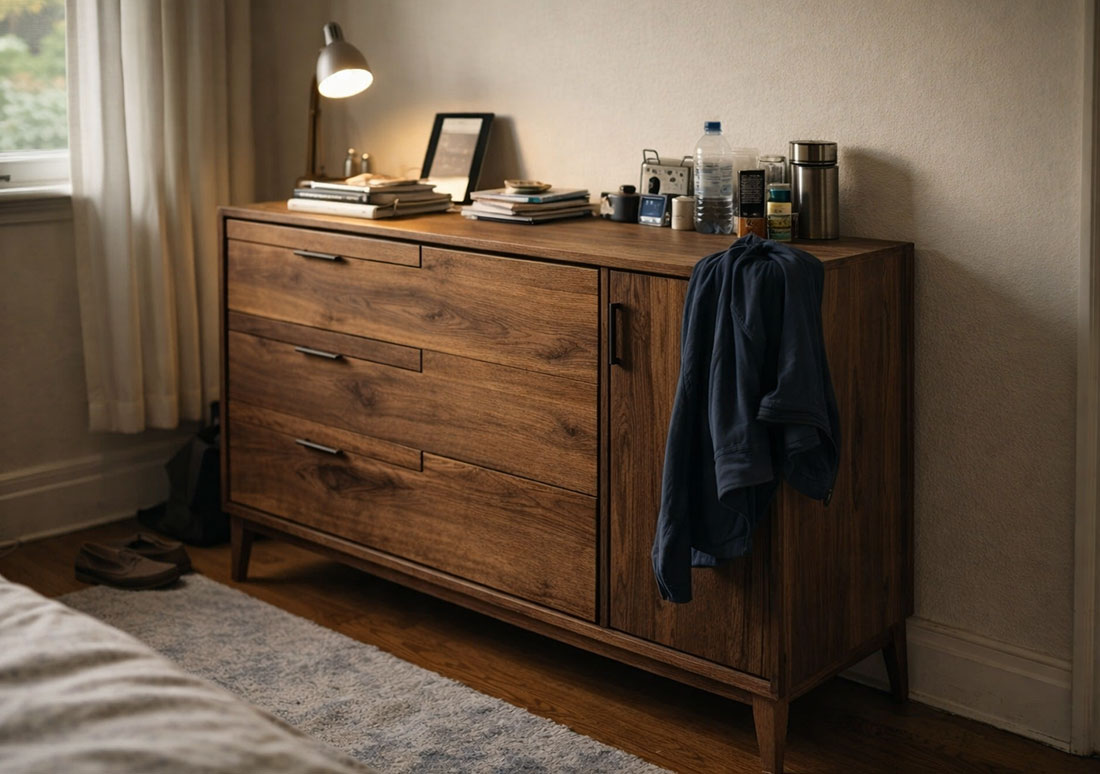
When a new piece starts forming, I don’t think about wood species or finishes.
Those decisions matter, but they come later.
The first thing I ask myself is simpler and harder at the same time:
-
How is this going to be used?
-
Where is it going to live?
-
Who will interact with it?
And just as importantly, can the design answer those questions and still feel like a statement?
If it can’t, everything that follows is compromised.
Starting with use, not appearance
It’s tempting to begin with how a piece will look. Shape, material, contrast. Those are the visible parts of furniture, and they’re what people notice first.
But furniture doesn’t exist to be looked at in isolation. It exists in rooms, among people, alongside movement, habits, and daily routines.
If a piece doesn’t serve its intended purpose, it doesn’t matter how beautiful it is. If it’s in the way, awkward to live with, or visually at odds with its surroundings, the design has already failed.
That’s why use comes first.
Not in a purely functional sense, but in a holistic one. How does the piece behave in a room? How does it interact with the space around it? Does it support the way people already live, or does it demand that they change their behaviour to accommodate it?
Furniture should belong, not interrupt
One of the quickest ways a piece becomes frustrating is when it feels like it doesn’t belong.
That can show up in obvious ways. Poor proportions. Awkward placement. A design that dominates the room when it should support it.
It can also show up more subtly. A wood choice that clashes with the rest of the space. A form that draws attention for the wrong reasons. A piece that technically works, but visually fights everything around it.
Good furniture should feel settled. Like it was meant to be there. This is the starting point for how I approach custom furniture work.
That doesn’t mean it can’t stand out. It means its presence makes sense.
Function and statement are not opposites
There’s a common assumption that furniture has to choose between functionality and expressiveness. In practice, the opposite is true.
The most compelling pieces are those in which function and statement reinforce each other.
When a design starts with how it will be used and where it will live, the visual decisions tend to become clearer. Proportions feel more confident. Details feel more intentional. Nothing needs to be added just to make the piece interesting.
The statement comes from resolution, not decoration.
Starting with the end in mind
I think about design the same way I think about sculpture.
A sculptor doesn’t start hammering away at a block of marble without a clear idea of what they’re trying to achieve. There’s a vision from the start, even though it may evolve as the work progresses.
Furniture is no different.
You need to understand what you’re working toward before you begin. How the piece will be used. How it will sit in a space. What problem is it meant to solve? What presence it should have.
Once that’s clear, the rest of the decisions have somewhere to land.
Why this approach matters
Starting this way doesn’t slow the process down. It actually makes it easier.
When you begin with use and context, you eliminate a lot of uncertainty early. You avoid chasing ideas that look good in isolation but fall apart in real life. You spend less time correcting decisions that should have been made at the beginning.
Most importantly, you end up with furniture that feels right to live with.
Not just on day one, but years later.
That’s the kind of work I’m interested in making. Pieces that function well, belong naturally, and still carry enough presence to feel intentional.
You don’t get there by starting with how something looks.
You get there by starting with how it will live.
Ready to Bring a Redbird Piece Into Your Home?
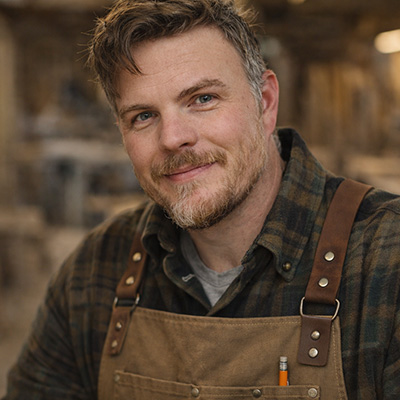
Kevin
Kevin is the maker behind Redbird Furniture. After years spent building companies, he turned his focus toward working with his hands and creating objects with purpose. He builds furniture with intention, with care for materials, proportion, and longevity. The Redbird Journal documents the space, process, and thinking behind the work.