Written by: Kevin
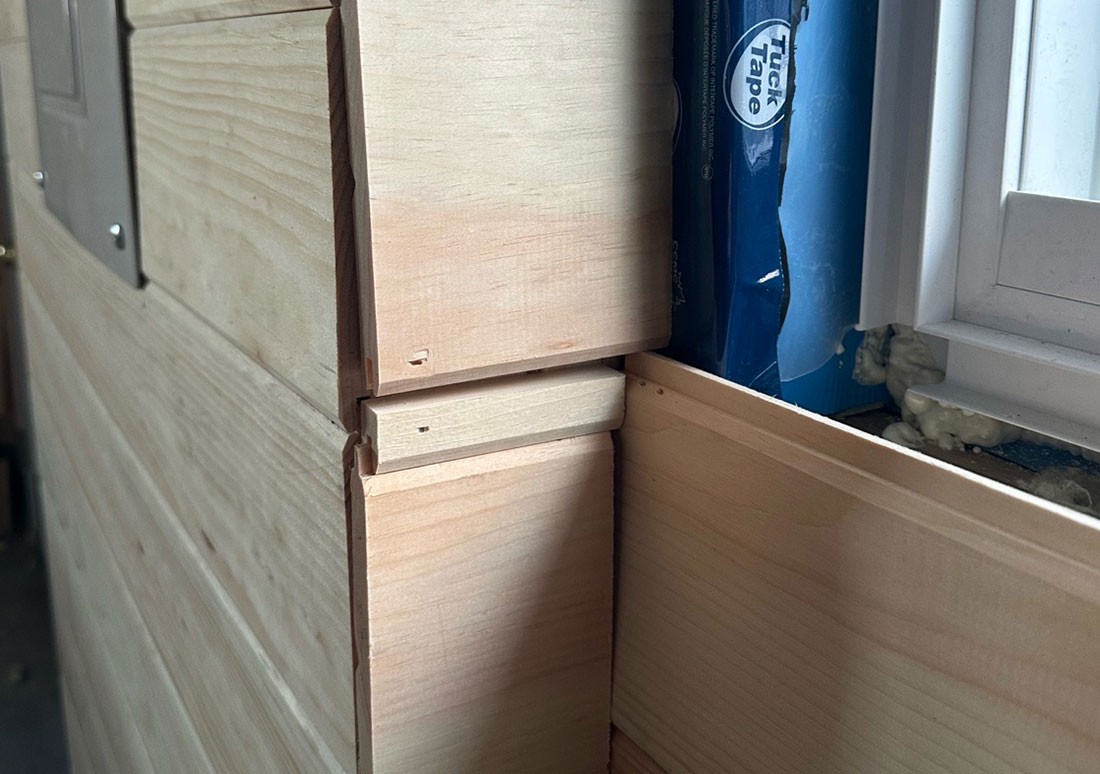
When I was installing the tongue and groove boards in the shop, I made a mistake.
At the time, it didn’t feel like one.
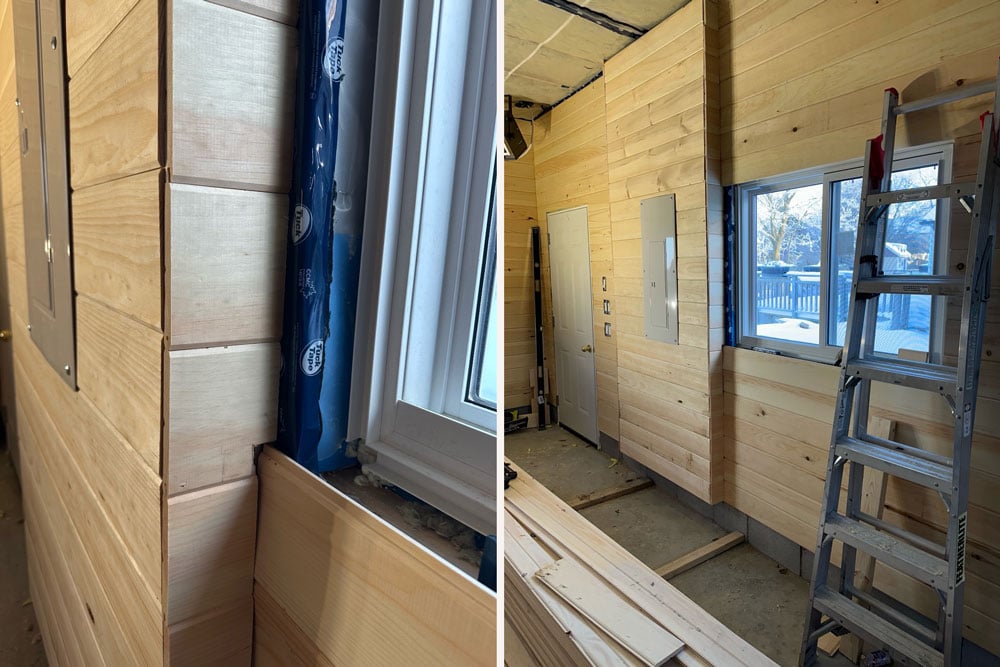
I was mid-process, fighting a bad cold, working through the details of the column around the window. I needed a longer board to land cleanly above it, and the solution I chose felt reasonable in the moment. I cut a small filler piece instead of stepping back and notching the longer board.
My brain told me it was fine.
It wasn’t until the column was fully installed that something started to feel off.
I stepped back, looked at it as a whole, and had that quiet reaction you only get when something isn’t sitting right. Nothing was obviously broken. Nothing jumped out. But I knew I had solved the problem in a way I wouldn’t normally accept.
That’s when I realized the issue wasn’t the result. It was the shortcut.
Most people would never notice it. Even if they did, they wouldn’t think twice. It didn’t affect function. It didn’t weaken anything. It didn’t change how the space would be used.
And that’s where the real problem started.
The temptation to hide it
My first thought was simple.
“I’ll just cover it with trim.”
And honestly, that would have worked. The trim would have hidden everything. The column would look clean. Finished. Intentional. Anyone walking into the shop would say, “This looks amazing.”
No one would know.
Except me.
I tried to convince myself that it didn’t matter. That this was a shop, not a finished piece of furniture. That perfection wasn’t the goal here. That I was being overly critical.
I even decided to sleep on it, thinking some distance might make it feel less important.
It didn’t.
I woke up more than once that night thinking about that column.
Not because it was visible.
Because it wasn’t honest.
Why it bothered me
The mistake itself wasn’t the issue. The shortcut was.
I knew that cutting a small filler piece instead of notching the longer board wasn’t the right way to do it. It introduced a break that didn’t need to exist. It was a solution chosen for speed, not correctness.
Covering it with trim wouldn’t fix that. It would just hide it.
And hiding it would mean accepting something I wouldn’t accept in my own work.
That’s a line I don’t want to cross.
Doing it again, properly
The next morning, I went back out to the shop and tore the column down.
Not the whole wall. Just the part that needed to be redone.
I pulled the boards off, cut the proper notch, and reinstalled everything the way it should have been done in the first place.
It took more time. It created more mess. It delayed everything else I had planned to do that day.
And when it was done, I felt good.
Not relieved. Not proud.
Just settled.
That feeling told me everything I needed to know.
Why this matters to how I work
This has nothing to do with tongue-and-groove boards.
It has everything to do with standards.
A lot of the decisions that make furniture last are invisible. You don’t see them when you walk into a room. You don’t point them out to friends. You don’t post photos of them.
They show up in how a drawer feels years later.
In whether a joint opens or stays tight.
In whether a piece ages quietly or starts to fight itself.
Those decisions are usually made when no one is watching.
If I’m willing to cut corners when it’s “just the shop,” it becomes easier to justify doing the same thing elsewhere. That’s not how I want to work.
This same thinking shows up in how I approach furniture that’s meant to live in real homes, not staged ones, which I’ve written about before.
Doing the work, you’ll be the only one who sees
There will always be moments where the easy option looks good enough.
Moments where hiding something would save time.
Moments where no one would ever know.
But the quality of the work isn’t defined by what’s visible. It’s defined by what you’re willing to live with.
In this case, I couldn’t live with it.
So I fixed it.
And now, when I walk past that column, I don’t think about the mistake anymore. I don’t think about the extra time it took. I don’t think about how easily it could have been hidden.
I just see work that was done properly.
That’s the standard I want to hold myself to, even when I’m the only one who ever sees it.