
What to Look for in a Custom Furniture Maker
Written by: Kevin
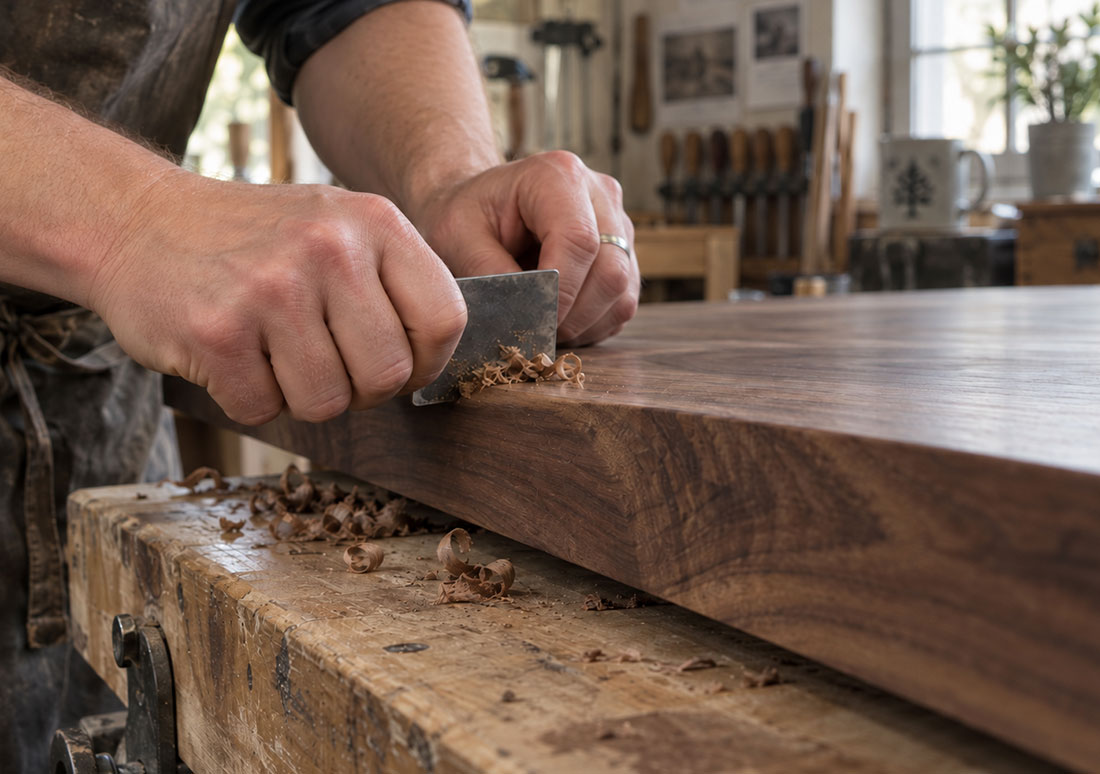
The best photo on a maker’s site tells you almost nothing.
It is lit well. It is styled well. The wood glows. And none of that answers the only question that matters, which is whether the person behind it can build a piece that holds up for thirty years.
I say this as someone whose own work is judged by those same photos.
A good image is a starting point, not proof. Choosing a custom furniture maker means learning to look past the hero shot and read the signals that actually predict good work.
Here is the short version. When you are choosing a custom furniture maker, look at four things: how they talk about material, the questions they ask you, what their lead time tells you, and what you can see in the details of past work. A maker who names the wood, leads with your room instead of a spec sheet, books a limited schedule, and shows clean edges and honest joinery is usually worth trusting. A polished photo alone is not.
The rest of this is how to read each of those signals.
Listen to how they talk about the wood
The first tell is material, and it surfaces fast.
Ask a maker what a piece is built from. A good one answers plainly. Solid white oak. Black walnut, book-matched across the top. No hedging, no marketing words standing in for a species.
Be careful when the answer gets vague.
“Premium hardwood” is not a wood. “Wood veneer” means a thin skin over a manufactured core, which is a different product with a different lifespan. A maker working in solid stock will tell you exactly what it is, because they selected the boards themselves.
Solid wood matters for a reason beyond feel. It can be sanded, repaired, and refinished for as long as you own it. A veneer surface cannot. When the top wears through, the piece is finished.
If someone builds in solid wood rather than veneer, they will say so without being pushed. That plain answer is one of the most reliable signals you get.
Notice what they ask you
The best makers ask more than they pitch.
When you first reach out, pay attention to the direction of the conversation. A maker who immediately quotes a price per square foot is selling a commodity. A maker who asks about the room is doing something else.
How you use the space. Where the light falls. Who sits where, and how often.
Those questions are not filler. Proportion decides how a piece feels more than any other choice, and proportion comes from understanding the room. A maker who leads with the room is telling you they design before they build.
You should not have to arrive with a finished spec. That is the maker’s job to help resolve. If someone hands you a blank order form and waits, you are not commissioning a piece. You are configuring one.
Read the lead time honestly
A short lead time sounds like good service. Often it is the opposite.
One maker building one piece at a time cannot turn work around in a week. Boards have to be selected and prepared. Joinery has to be cut to last. A finish has to cure between coats. None of that is fast, and none of it should be.
So a waiting list is not a red flag. It is usually a sign the work is worth waiting for.
What you want is an honest estimate, not an optimistic one. A maker who tells you several weeks and means it is more trustworthy than one who promises next week and disappears. I book a limited number of projects at a time for exactly this reason, and I wrote more about why custom furniture takes the time it does.
Be most wary of the maker who is always instantly available. Ask yourself why the schedule is empty.
Judge the work by its edges, not its angles
This is where a portfolio earns its keep, if you know what to look for.
Skip the dramatic wide shot. Look at the details instead.
Find a close photo of an edge. It should be clean and consistent, softened by hand rather than left sharp or rounded over by a machine. An edge is where care shows, because it is the part a maker cannot fake.
Look at how two pieces of wood meet. A joint should be tight, with grain that flows rather than fights. Gaps, filler, and mismatched seams are the things a good photo hides and a careful one reveals.
Then look across several pieces for consistency. One good table can be luck. A body of work that is resolved, piece after piece, is judgment. That consistency is the difference between someone who made a nice thing once and someone who can be trusted with yours.
If the photos are all wide and none are close, ask for detail shots. A maker proud of the joinery will send them gladly.
Expect a straight answer on price
Custom work costs more than retail, and a good maker will not apologize for it or dodge it.
What you want is a clear explanation of where the money goes. Material, scale, complexity, and the hours one person spends at the bench. Price tied to those things is honest. Price with no reasoning behind it is a guess.
Be cautious of a quote that arrives before the maker understands the project. A real number comes after the scope is defined, not before. If you want a sense of the range first, I wrote plainly about what custom furniture costs and why.
You are not looking for the lowest price. You are looking for a maker who can tell you what you are paying for.
Know when a maker is the wrong call
The honest part of this list is that a custom furniture maker is not always the right choice.
If you need a piece next week, commission work will not deliver it. If you are furnishing a room you plan to redo in a few years, retail is the sensible call. A commission earns its cost over time, and time is the thing it needs.
A good maker will tell you this themselves.
The ones worth trusting turn work away when it is not a fit. If someone says yes to everything, that eagerness is not a virtue. It means no one is protecting the quality of the result, including from you.
When you cannot find the right size, the right material, or a piece built to be kept, that is when a maker is worth it. That gap is the whole reason the work exists.
Where my work fits
I run Redbird, a one-person studio in Uxbridge, Ontario. I build custom wood furniture in solid walnut and white oak, one piece at a time, and I am accountable for every decision from the first board to the last coat.
I would rather you ask me hard questions than not. Where the wood comes from, how the joints are cut, why the lead time is what it is. A maker who has made good decisions is glad to explain them.
If you want to see how I work before anything is decided, the custom commission process starts with a conversation about the room, and you can read more about the studio and how I got here. No spec sheet required.
Choosing a maker is really just choosing who to trust with a piece you intend to keep. Look past the photo, and the right one is not hard to find.
Frequently asked questions
What should I look for in a custom furniture maker?
Look at four things: how they describe their materials, the questions they ask about your space, what their lead time signals, and the detail in their past work. A maker who names the wood, leads with your room, books a limited schedule, and shows clean edges and tight joinery is usually trustworthy. A well-lit photo on its own is not enough to judge by.
How do I know if a furniture maker is any good?
Judge the work by its details rather than its wide shots. Look for clean, hand-softened edges, tight joints where the grain flows, and consistency across several pieces, not just one. Ask whether the piece is solid wood or veneer, and a good maker will answer without hedging.
What questions should I ask a custom furniture maker?
Ask what the piece is built from, and expect a specific wood, not “premium hardwood.” Ask how the joinery is done and whether the piece can be repaired later. Ask about the lead time and how the price is arrived at. A maker who made considered decisions will explain them plainly.
Is a custom furniture maker worth it?
It depends on what you need. If you cannot find the right size, material, or a piece built to last, a maker is worth the cost and the wait. If you need something quickly or are furnishing a short-term space, retail makes more sense. A good maker will tell you honestly when a commission is not the right call.
How long should custom furniture take to make?
Most one-maker commissions land in the several-weeks range, and longer for larger or more complex pieces. That time covers selecting and preparing boards, cutting joinery to last, and letting the finish cure properly. A very short lead time can be a sign that corners are being cut, or that the schedule is empty for a reason.
Have a piece in mind?

Kevin
Kevin is the maker behind Redbird Furniture. After years spent building companies, he turned his focus toward working with his hands and creating objects with purpose. He builds furniture with intention, with care for materials, proportion, and longevity. The Redbird Journal documents the space, process, and thinking behind the work.