
Are Walnut Dining Tables with Metal Bases Overdone?
Written by: Kevin
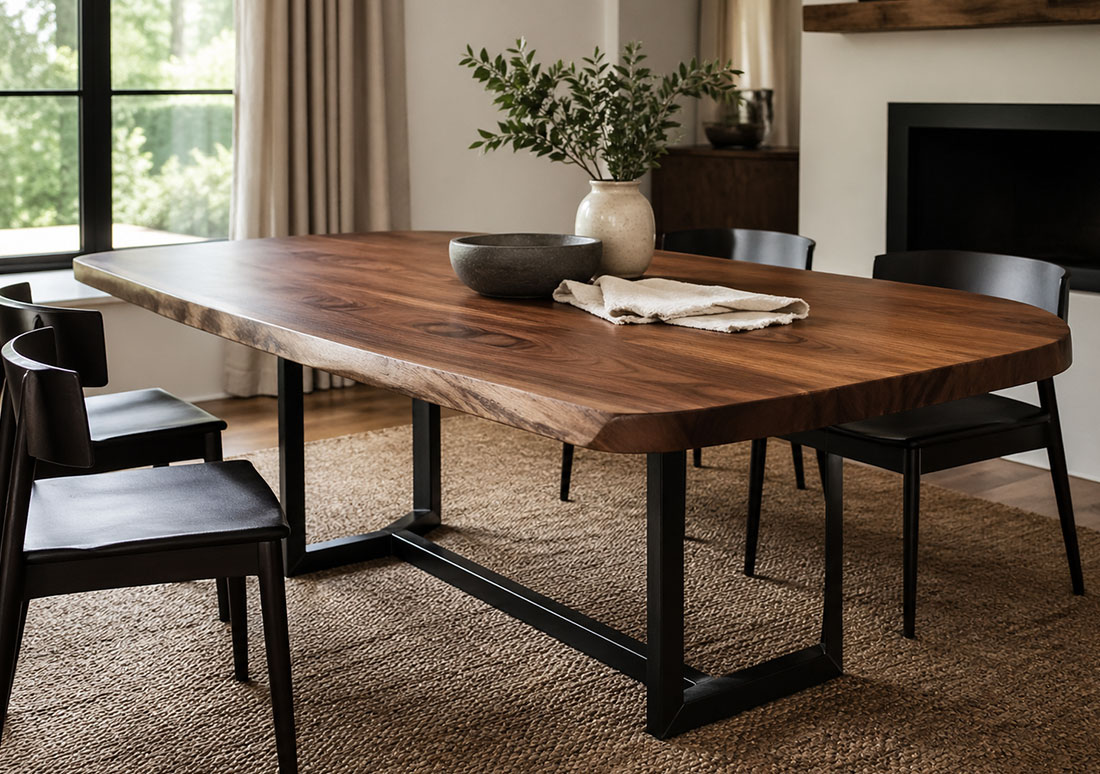
Walnut dining tables with metal bases are everywhere.
You’ve seen the look before. A warm walnut top. A black steel base. Clean lines. Modern room. Maybe a slab top, maybe a straight edge, maybe something in between.
It is popular for a reason.
But popularity creates a problem. The more often a design appears, the more likely the idea becomes formulaic. What once felt fresh starts to feel automatic. A walnut top gets paired with metal legs because that is what people expect, not because it is what the room or the piece actually needs.
So, are walnut dining tables with metal bases overdone?
Sometimes.
But the better answer is this: the lazy version is overdone. The thoughtful version still works beautifully.
Where the look starts to feel tired
A walnut dining table with a metal base can go wrong when the design becomes too predictable.
A slab top.
A black metal base.
No real thought about proportion, edge profile, scale, or how the table will live in the room.
The issue is not walnut. It is not metal. It is not even the combination.
The issue is when the base feels like an afterthought.
You can feel it when a table is just a beautiful top sitting on whatever legs were easiest to source. The pieces do not quite speak to each other. The wood has character, but the base does not support it visually. Or the metal is so heavy and industrial that it overwhelms the warmth of the walnut.
That is when the table starts to feel less like furniture and more like a formula.
Why the combination still works
There is a reason walnut and metal became such a common pairing.
Walnut brings warmth, depth, and natural variation. It has enough character to feel special, but enough restraint to fit into refined spaces.
Metal brings structure. It gives the table strength without requiring a visually heavy base. It can make a large table feel lighter, cleaner, and more architectural.
Together, they create contrast.
Warm and cool.
Natural and precise.
Organic and structured.
When the balance is right, the result is not trendy. It is calm, useful, and strong.
That is why this combination still works. Not because it is fashionable, but because the materials solve different problems.
The table still has to belong in the room
A dining table is not an object in isolation.
It has to live with the flooring, the chairs, the lighting, the architecture, and the way people move around the space.
This is where many walnut and metal tables fall short.
They are designed to look good in a product photo, but not necessarily to live well in a real home.
The base might make seating awkward.
The top might feel too thick for the room.
The edge might be too rustic for the space.
The black metal might compete with other dark elements nearby.
A table can be beautiful and still feel wrong if it does not belong.
Before choosing a walnut dining table with a metal base, the first question should not be, “Do I like this style?”
It should be, “Does this make sense in my room?”
That same idea runs through how I think about furniture that is meant to live in real homes, not staged ones.
What makes walnut and metal feel timeless instead of overdone
The difference usually comes down to restraint.
A timeless walnut dining table with a metal base does not need to shout. It needs the right proportions, materials, and details.
Proportion
Proportion is everything.
A thick walnut top can feel powerful, but it can also feel heavy. A slim top can feel refined, but it can also feel underbuilt if the table is large.
The base has to match the visual weight of the top. Too thin, and the table feels unsupported. Too bulky, and the whole piece starts to feel industrial.
The goal is balance.
Base style
The metal base should do more than hold the top up.
A slim U-base feels clean and architectural.
A pedestal base can create a stronger statement.
A trestle-style base can add presence while keeping seating comfortable.
The right base depends on the room, the table size, and how people will sit around it.
This is where a built-to-order approach matters. A custom walnut dining table with a metal base can be designed around the space instead of being forced into a standard format.
Edge detail
The edge of the table changes everything.
A straight edge feels clean and modern.
A soft roundover makes the table feel more approachable.
A live edge adds character, but it needs restraint.
The edge should support the overall tone of the piece. If the room is refined and modern, an overly dramatic live edge may feel out of place. If the space is warm and natural, a clean but organic edge can work beautifully.
The quality of the walnut
Not all walnut has the same effect.
Grain, tone, board selection, and colour variation matter. Some walnut feels quiet and even. Some feels dramatic and expressive. Neither is automatically better.
The question is what the piece needs.
If the base is simple, the walnut can carry more visual interest. If the base is bold, the top may need to be calmer. Good design is often about knowing which element should lead.
If you want to better understand how walnut compares to other hardwoods, this guide to types of wood for furniture is a good place to start.
When this style might not be the right choice
There are times when a walnut dining table with a metal base may not be the best answer.
If a room already has a lot of black metal, adding more can make the space feel repetitive.
If the home leans very traditional, an all-wood base may feel more natural.
If the dining room is small or visually soft, a heavy industrial base might overpower it.
That does not mean the style is wrong. It means the table has to be considered in context.
Good furniture is not about choosing the most popular option. It is about choosing the option that makes the most sense for the space, the people, and the way the piece will be used.
Why “overdone” is not the same as “done.”
A design can become common and still be good.
The problem is not that people have seen walnut and metal before. People have seen wood dining tables for centuries. Familiarity does not make something tired.
What makes something tired is a lack of thought.
When a walnut dining table with a metal base is designed with care, it still has a lot going for it.
It is durable.
It is versatile.
It works in modern and transitional spaces.
It can feel substantial without being visually heavy.
It can be a statement piece without becoming loud.
That is a strong combination.
The category is not the problem.
The shortcut version is.
Final thought
So, are walnut dining tables with metal bases overdone?
Only when they are treated like a template.
When the wood is chosen carefully, the base is designed with purpose, and the proportions suit the room, the combination still works.
Maybe better than ever.
Because the goal is not to make a table that looks current.
The goal is to build a table that feels right now and still feels right years from now.
That is the difference between a trend and a piece worth keeping.
Looking for a custom walnut dining table?
Kevin
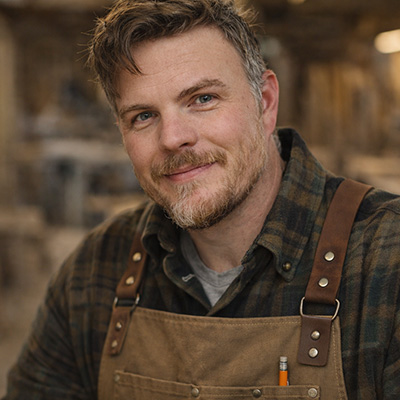
Kevin is the maker behind Redbird Furniture. After years spent building companies, he turned his focus toward working with his hands and creating objects with purpose. He builds furniture with intention, with care for materials, proportion, and longevity. The Redbird Journal documents the space, process, and thinking behind the work.